
A Greeting step plays a message to the caller before anything else happens. It's the first thing most call flows do.
The commonest reason to use one is call recording: if you record calls, you should tell callers, and a greeting is how. See Call Recording and the Law.
It's also where you set expectations — opening hours, a busy period, or simply confirming they've reached the right business.
Text to Speech
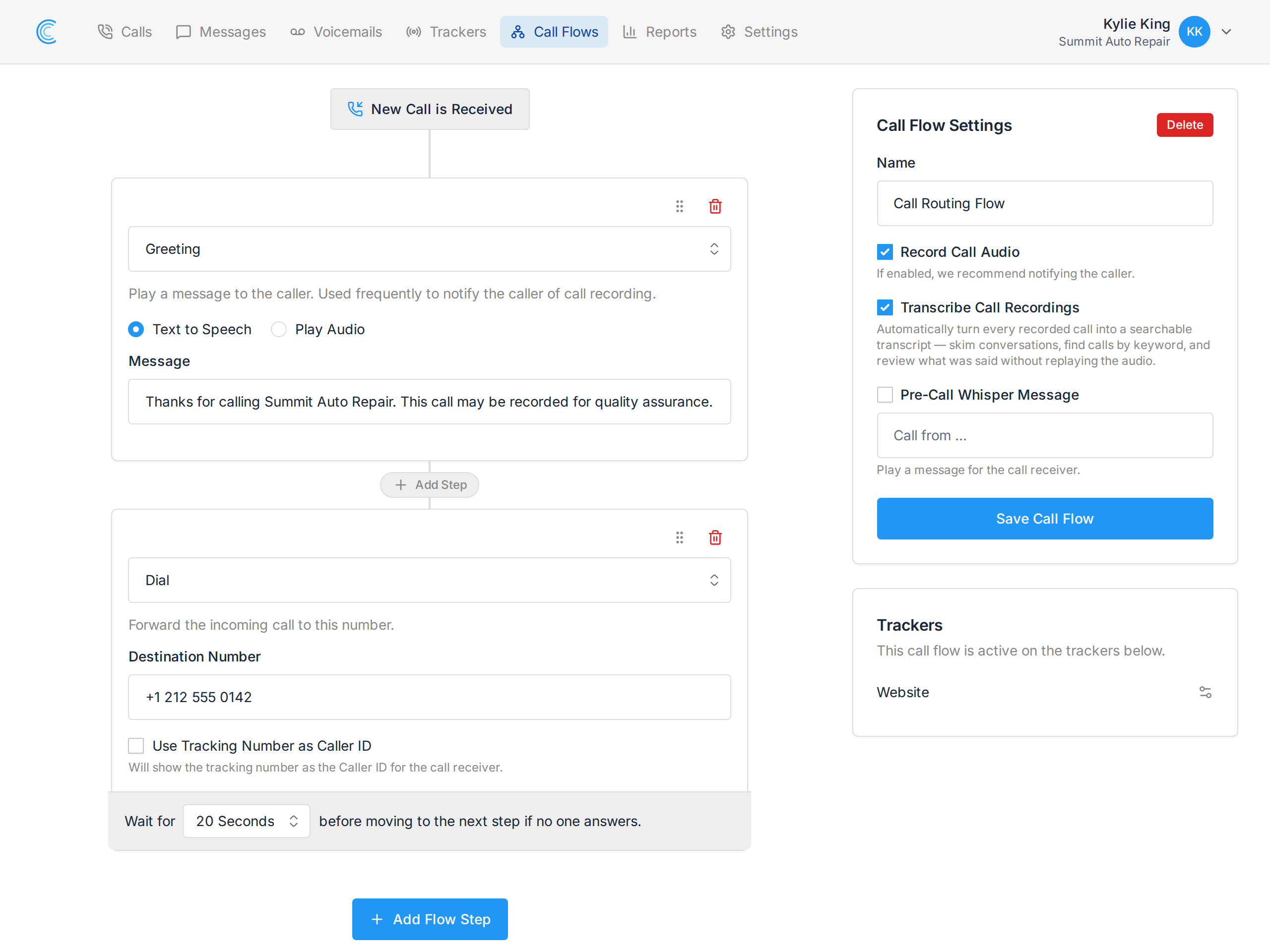
Type what you want said and we read it aloud. Nothing to record, and changing it later takes seconds.
Keep it short. Callers are waiting to be connected, and every second of greeting is a second before their call is answered. One or two sentences is plenty:
Thanks for calling Summit Auto Repair. This call may be recorded for quality assurance.
Write it as it should be spoken. Spell out anything you want read a particular way, and use full punctuation — it drives the pacing.
Play Audio
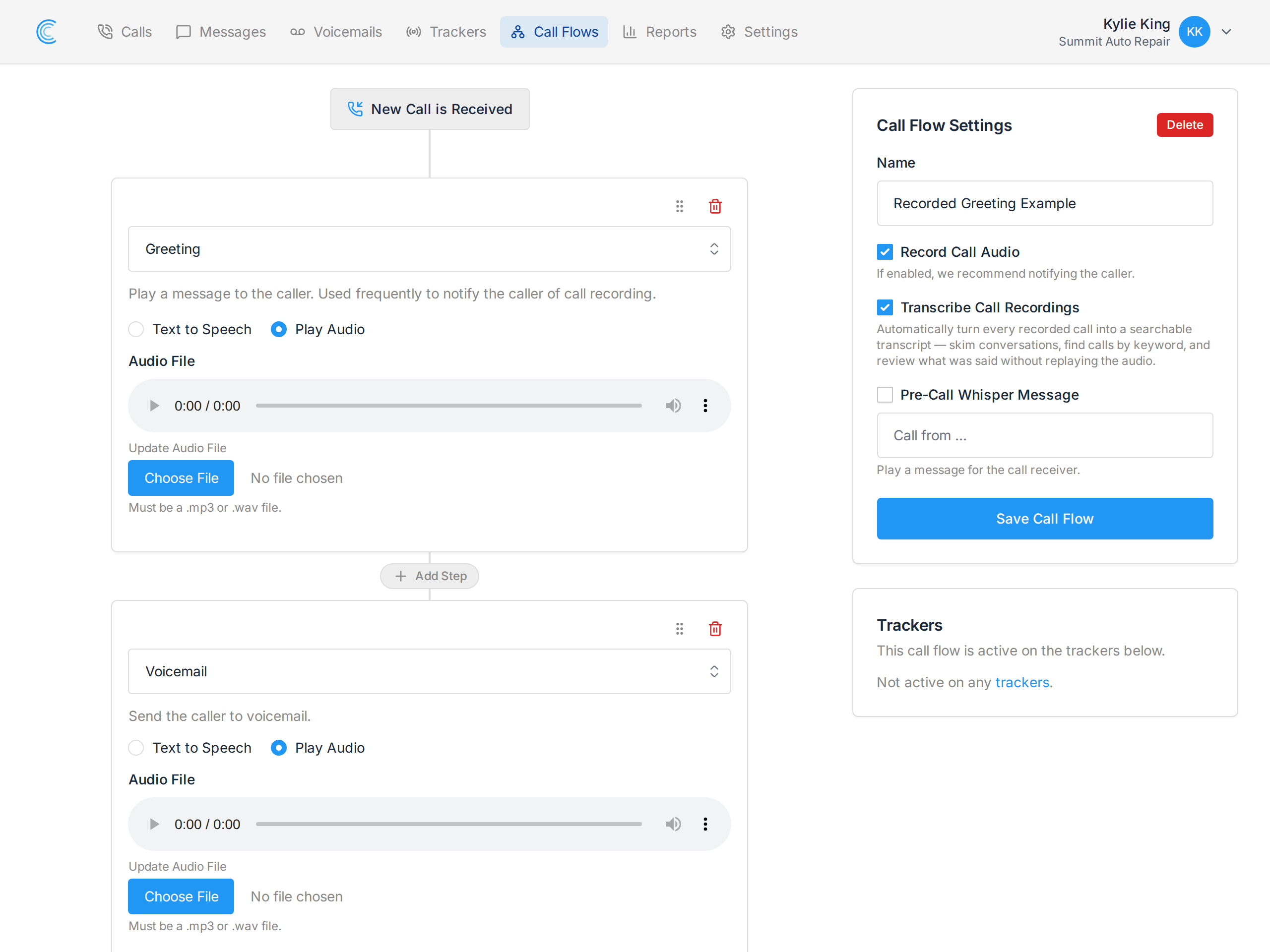
Select Play Audio and upload a file to use a recording of your own instead: a professional voiceover, music, or a message in a specific voice.
Files must be .mp3 or .wav. Once uploaded, a small player appears so you can check what callers will hear without placing a test call.
Audio is the right choice when the greeting is part of your brand. Text to speech is the right choice when you'll want to change it — a seasonal message written as text takes a moment to update, where audio means recording again.
Where the Greeting Goes
A greeting is normally the first step, before a Forward Call, Simulring or Menu step. The caller hears it, then the flow continues.
You can use more than one in a flow — for example a greeting before a menu, and another inside a branch.