
Call recording is useful — for training, for resolving disputes, and for hearing what customers actually ask before they buy. It also carries legal obligations that vary by where you and your callers are.
This article is practical guidance, not legal advice. Recording law differs between countries and between US states, and it turns on where each party is at the time of the call. If you're unsure, ask a lawyer familiar with your jurisdiction.
Consent, Briefly
The distinction most businesses run into is one-party versus all-party consent.
Under one-party consent, one participant knowing about the recording is enough — and if you're recording your own calls, that's you. Under all-party consent, everyone on the call must know.
The complication is that a phone call can span jurisdictions. A business in a one-party area routinely takes calls from people in all-party areas, and the stricter rule can apply.
Which is why the practical answer is simple: tell every caller, every time. An announcement satisfies all-party consent, and it costs you nothing.
Announcing the Recording
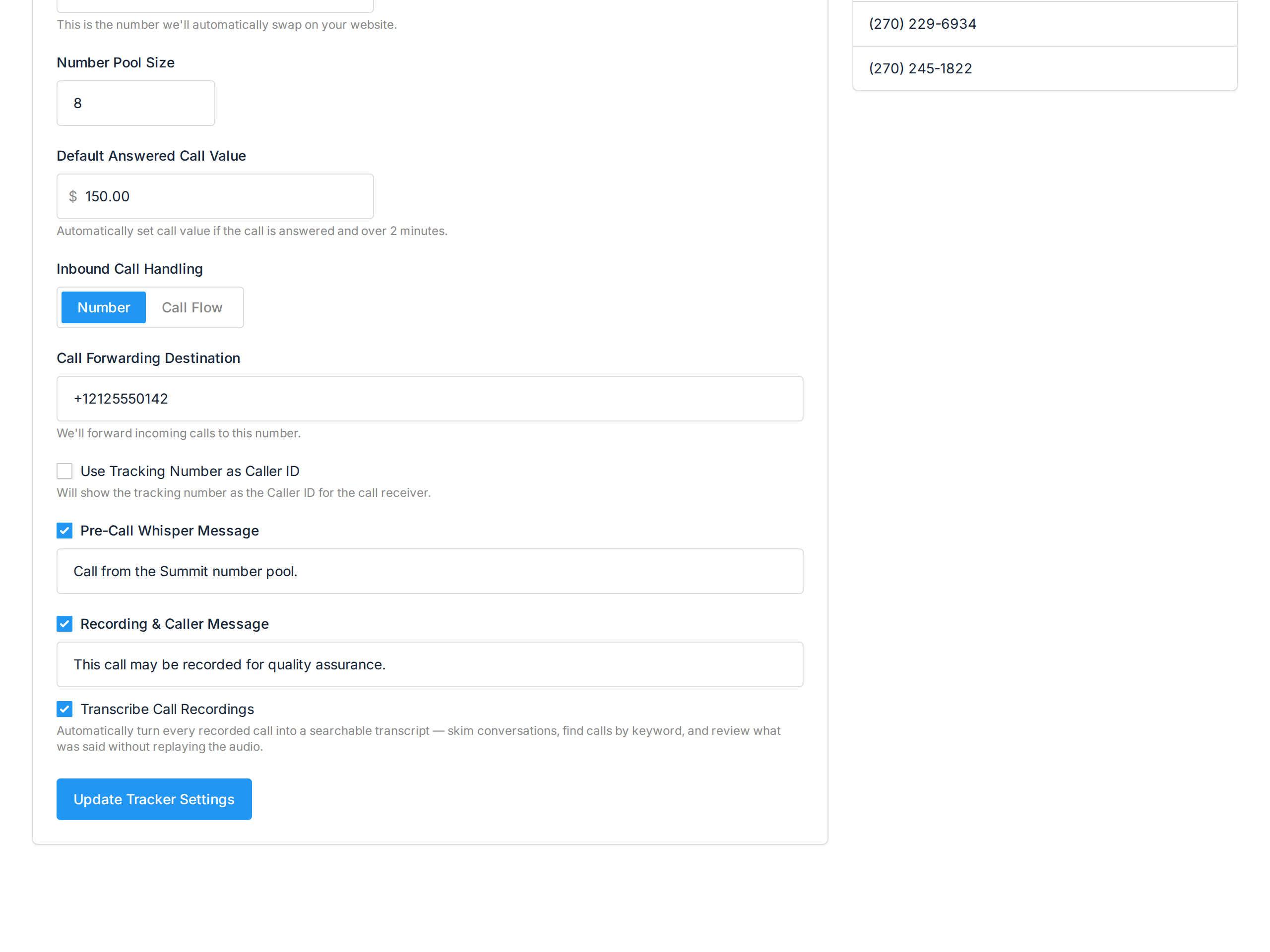
Tick Recording & Caller Message in your Tracker Settings and type the message callers hear before the call connects. Something plain works best:
This call may be recorded for quality assurance.
The message plays automatically on every call to that tracking number, so consent isn't something anyone has to remember to say.
You can also use a Greeting step in a call flow if you want a longer message or one that combines the notice with a welcome.
If You Transcribe
AI transcription creates a written record of the same conversation. It doesn't change your consent obligations — but a searchable transcript is easier to disclose, retain and delete than audio, so it's worth deciding early how long you keep both.
Practical Advice
- Turn the caller message on whenever recording is on. They belong together.
- Keep the notice at the start, before the conversation, not after.
- Apply it consistently across every tracker rather than campaign by campaign.